
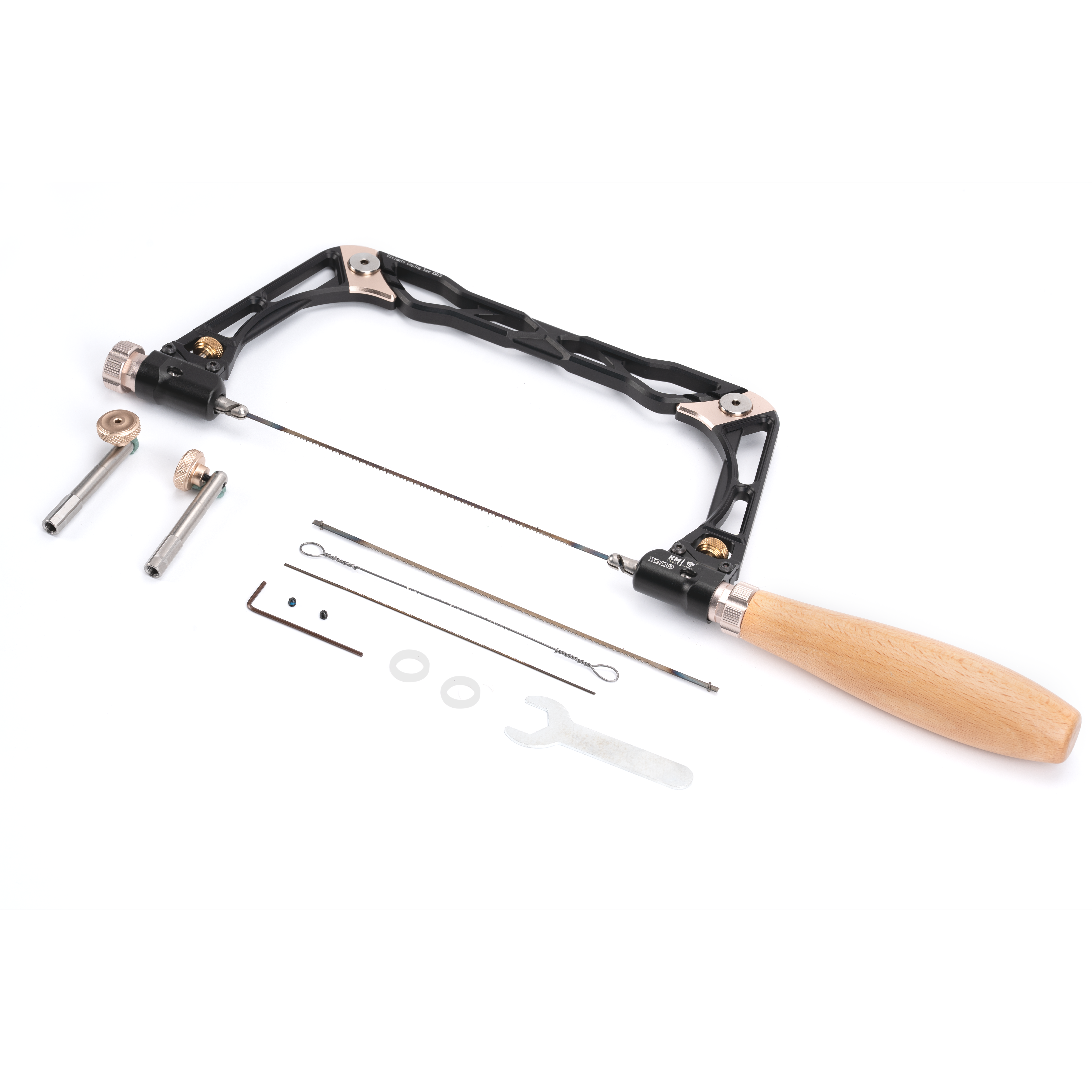
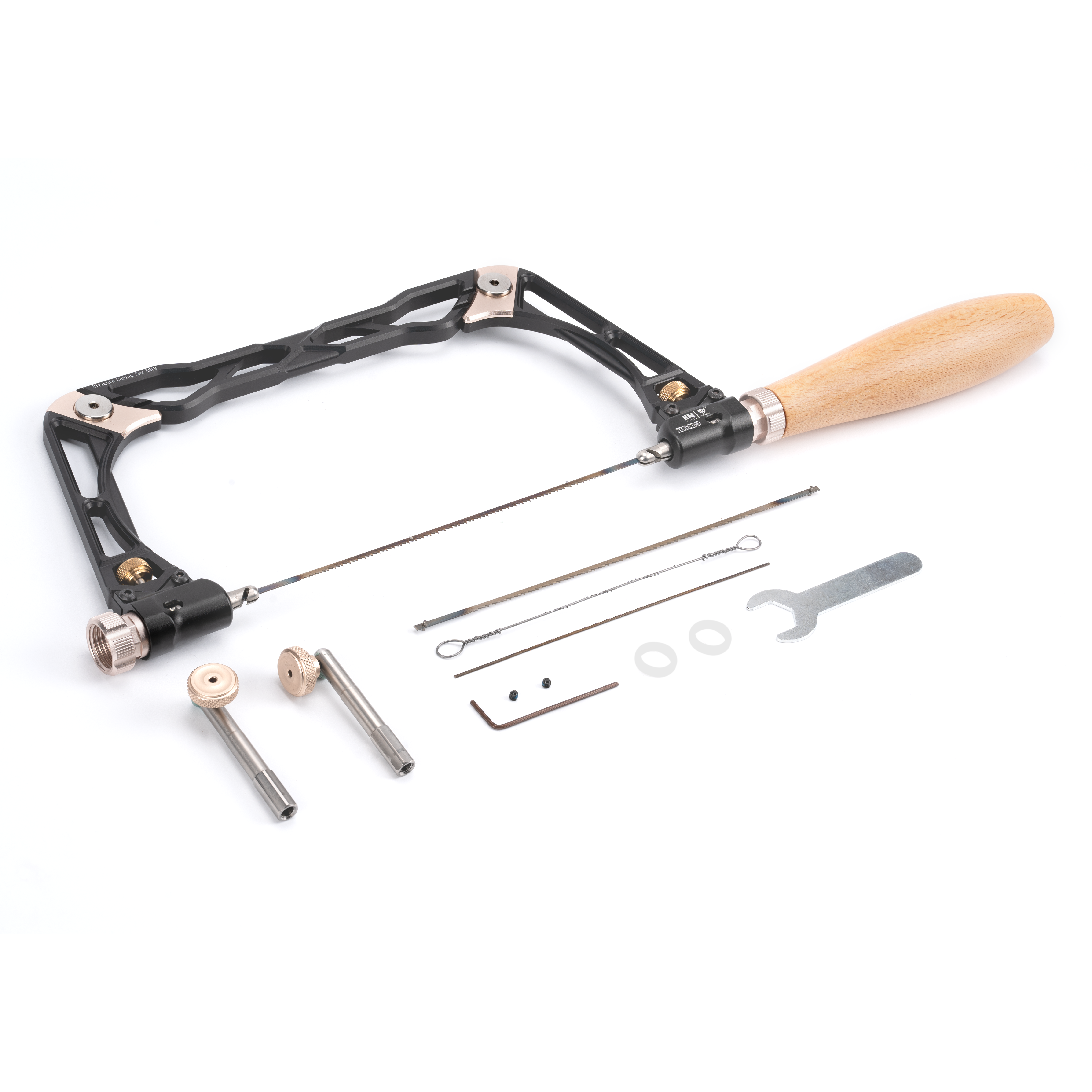
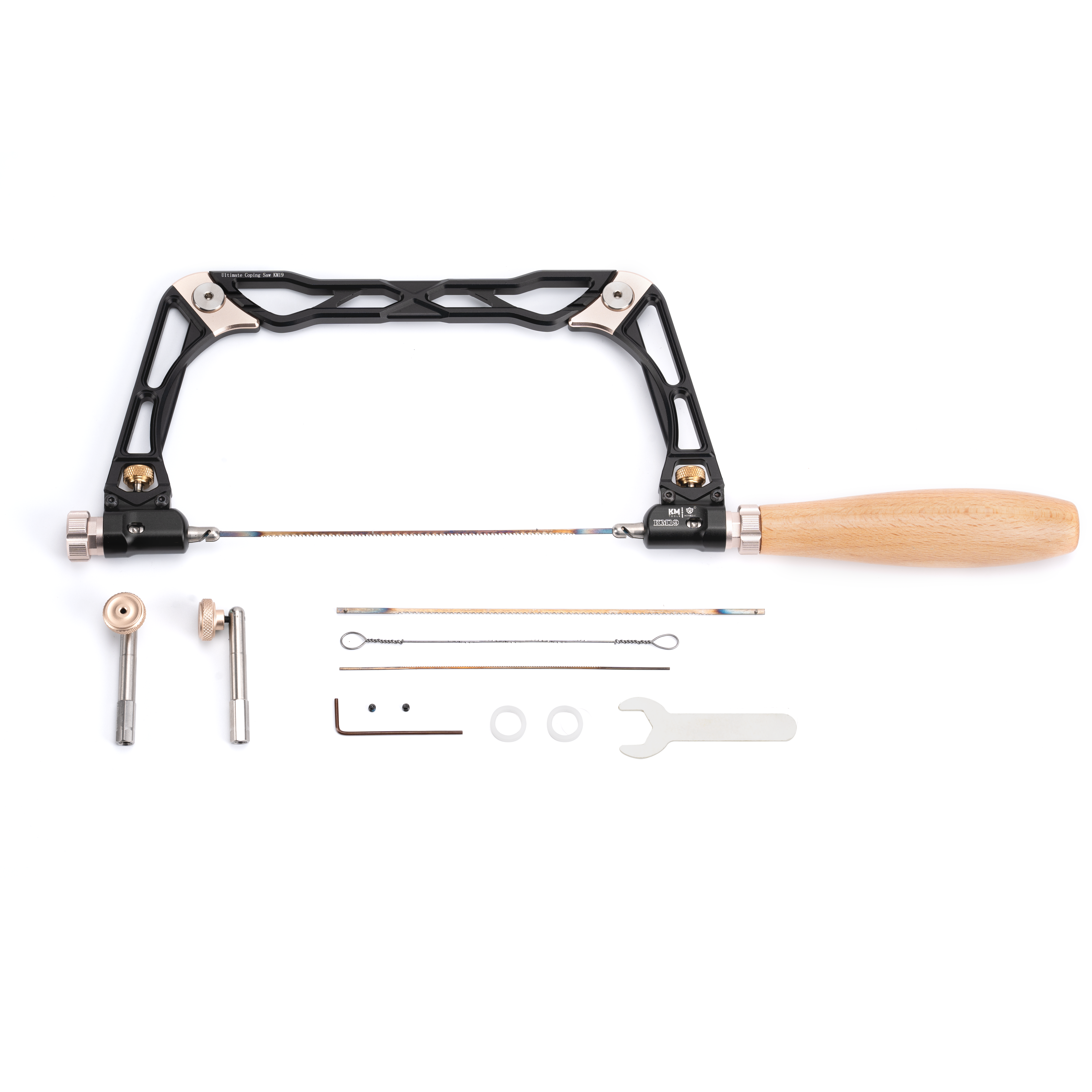
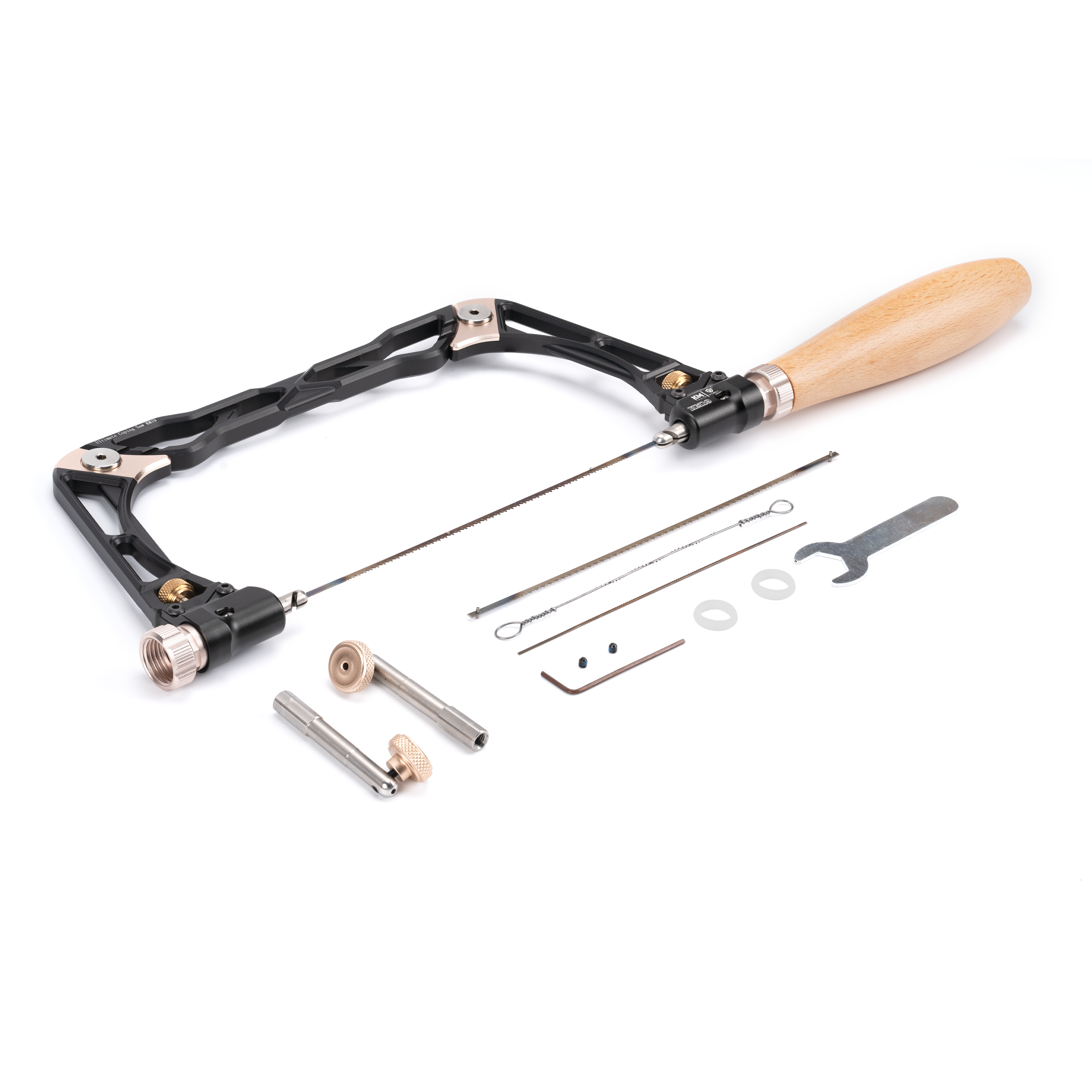
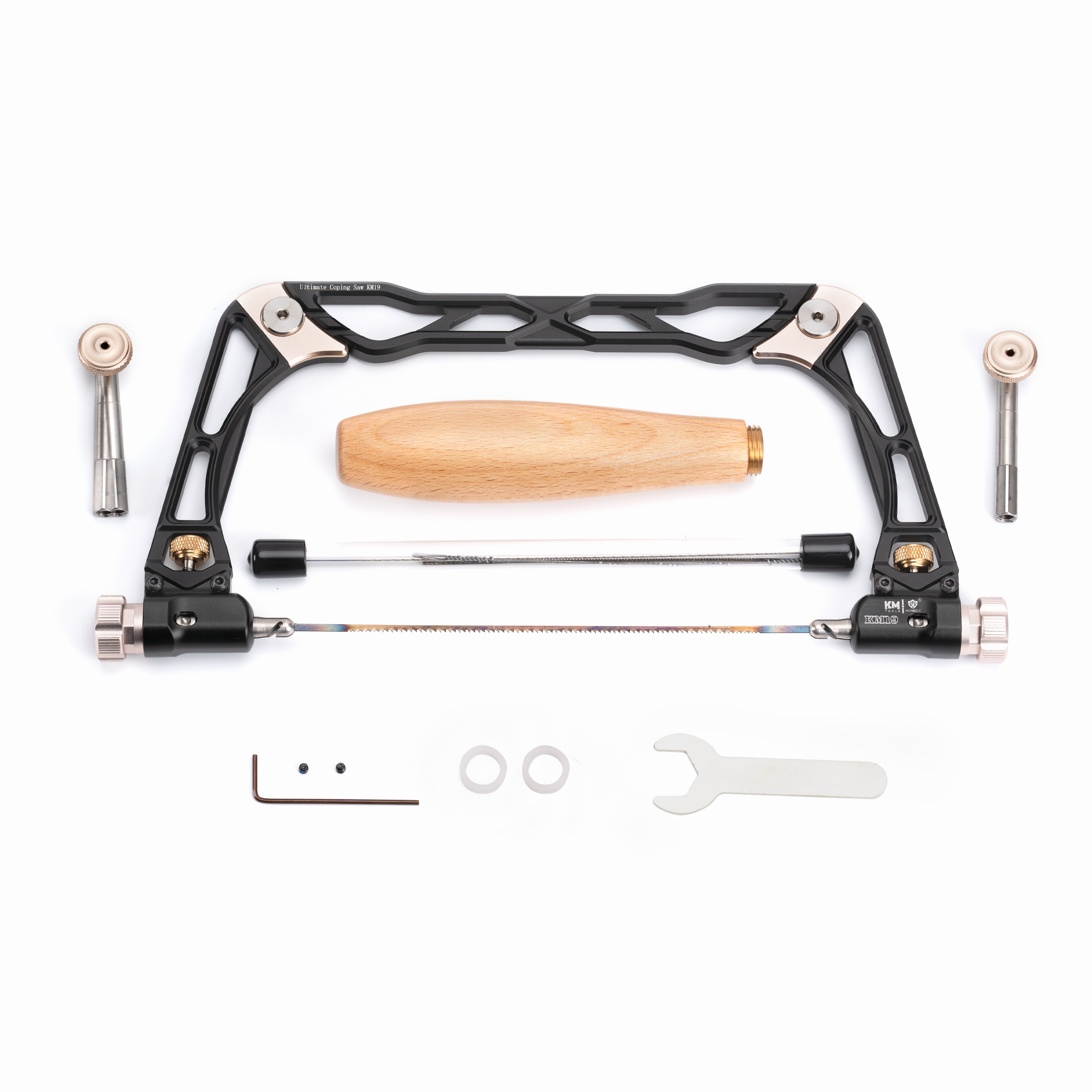
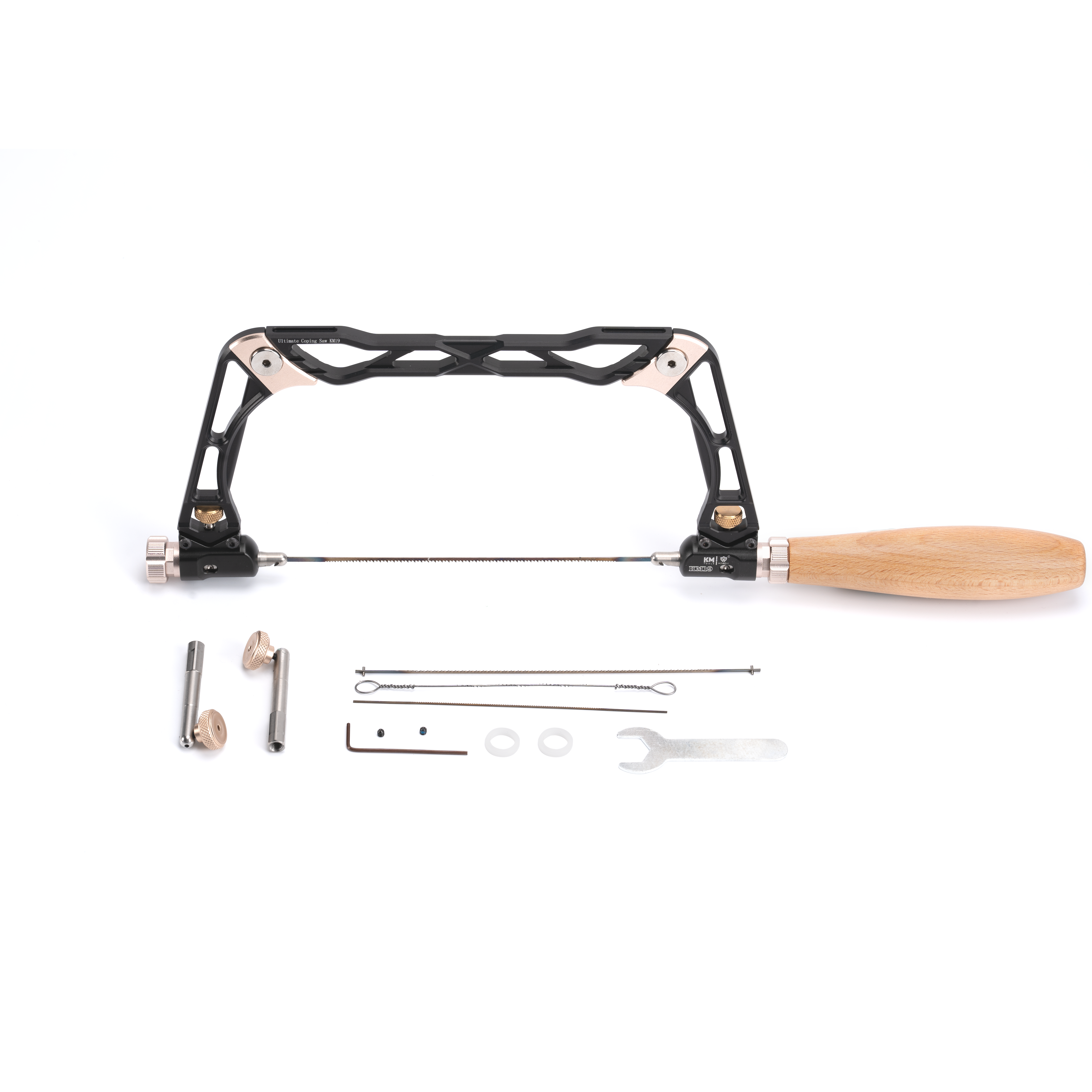
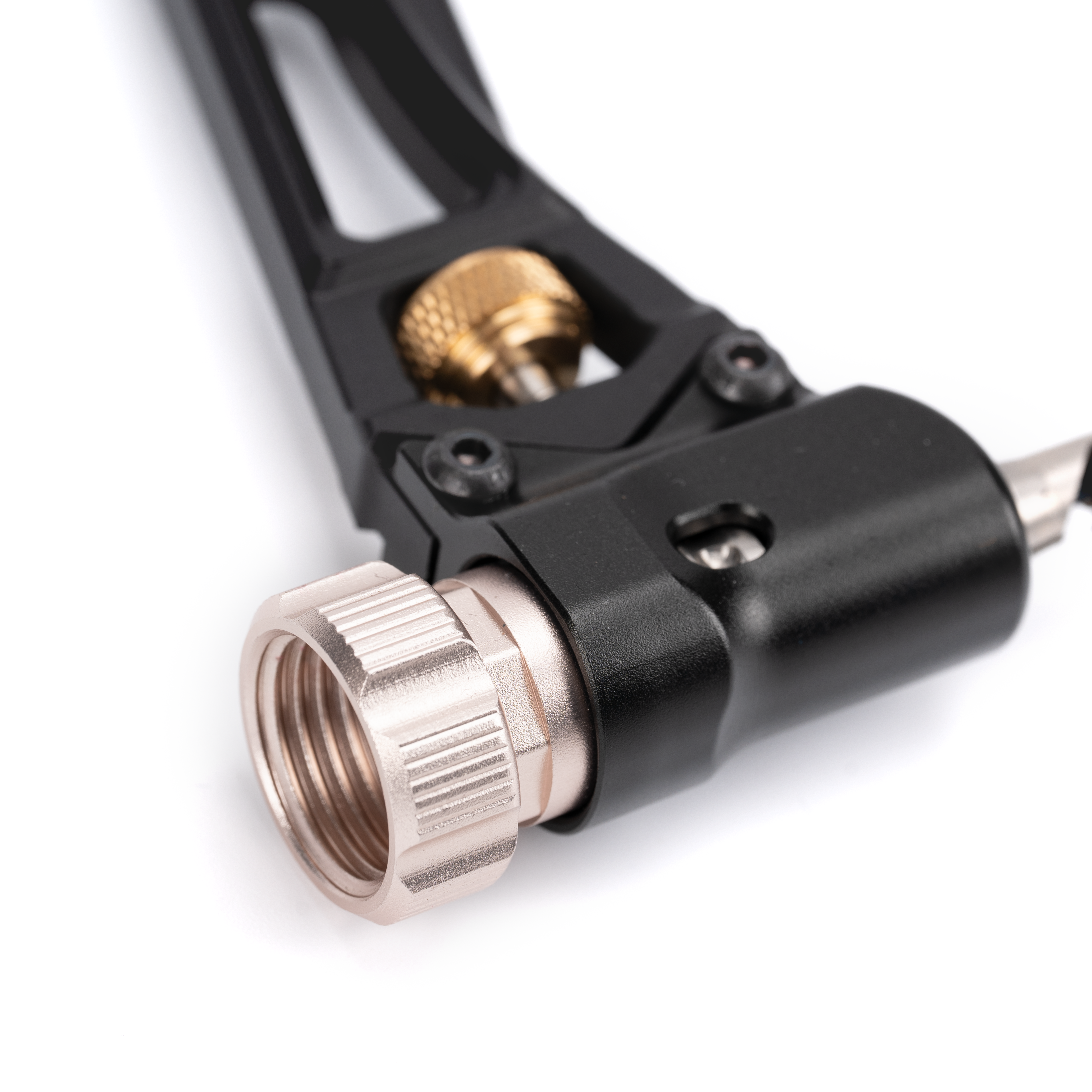
Seghetto da traforo HONGDUI KM19 da 6 pollici
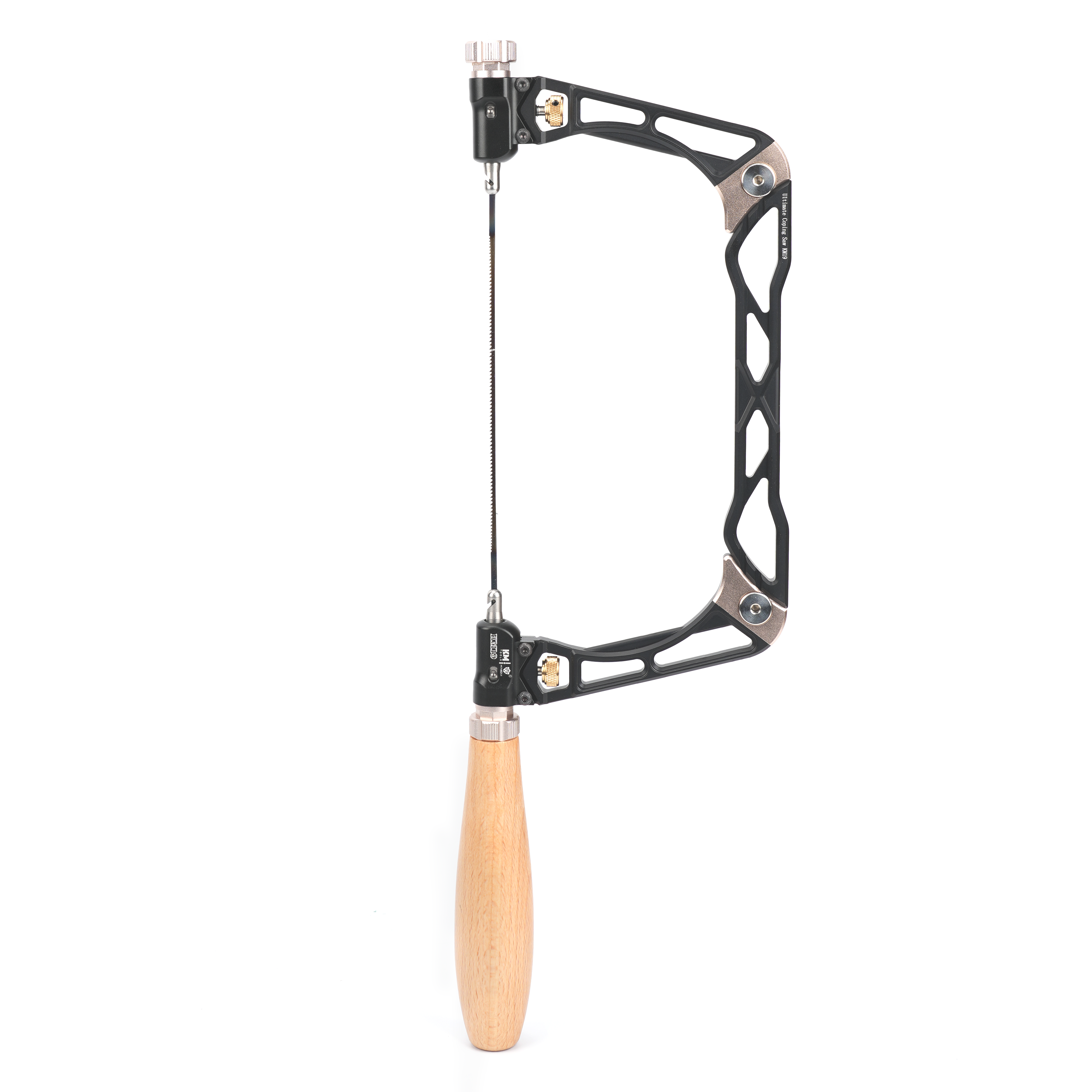
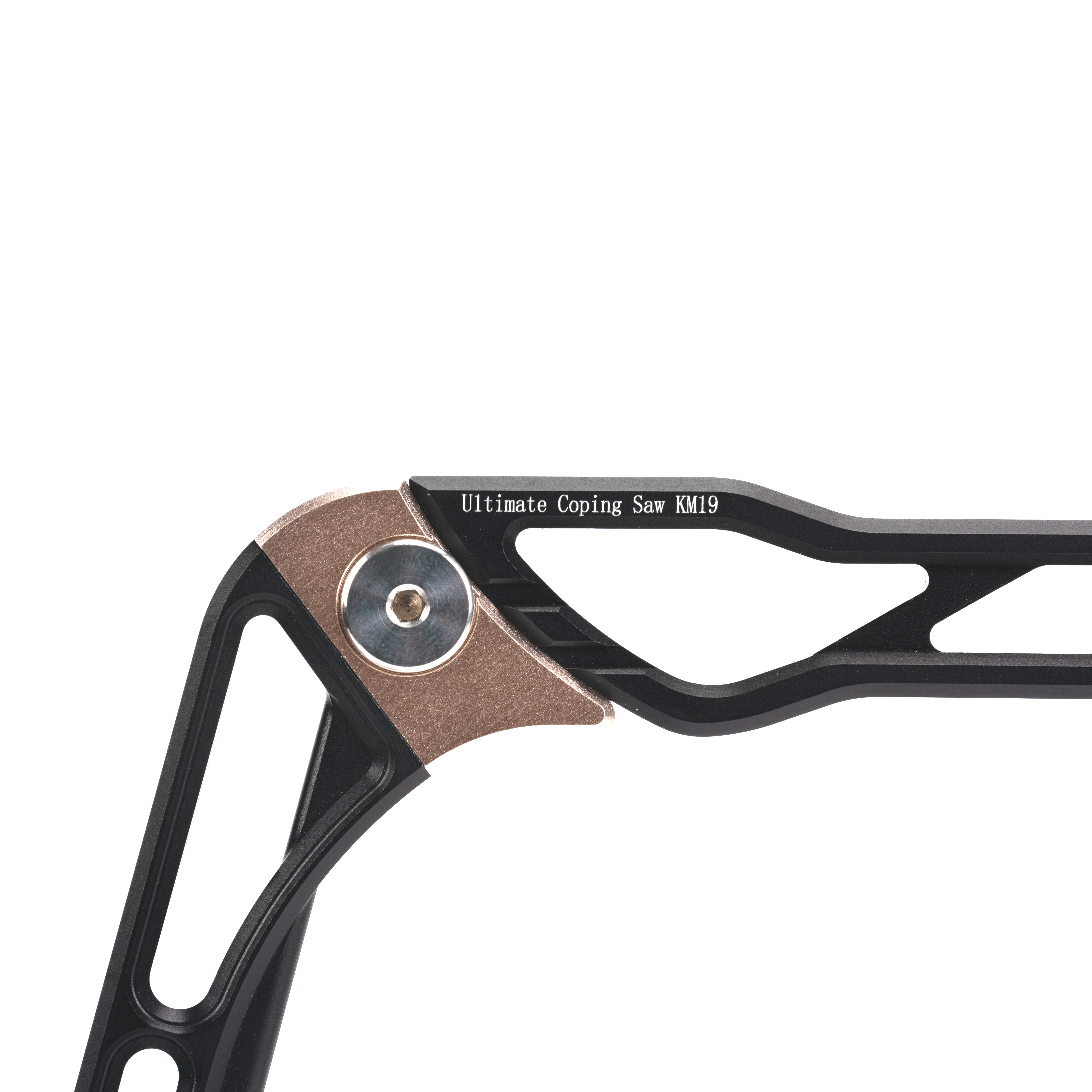
Seghetto da traforo in alluminio di grado A: Realizzato in alluminio 7075, noto per la sua resistenza e durata superiori, garantendo prestazioni a lungo termine.
Giunti a tenone e mortasa: Design unico per una maggiore tensione della lama, fornendo più controllo e stabilità rispetto ai tradizionali seghetti da traforo monoblocco.
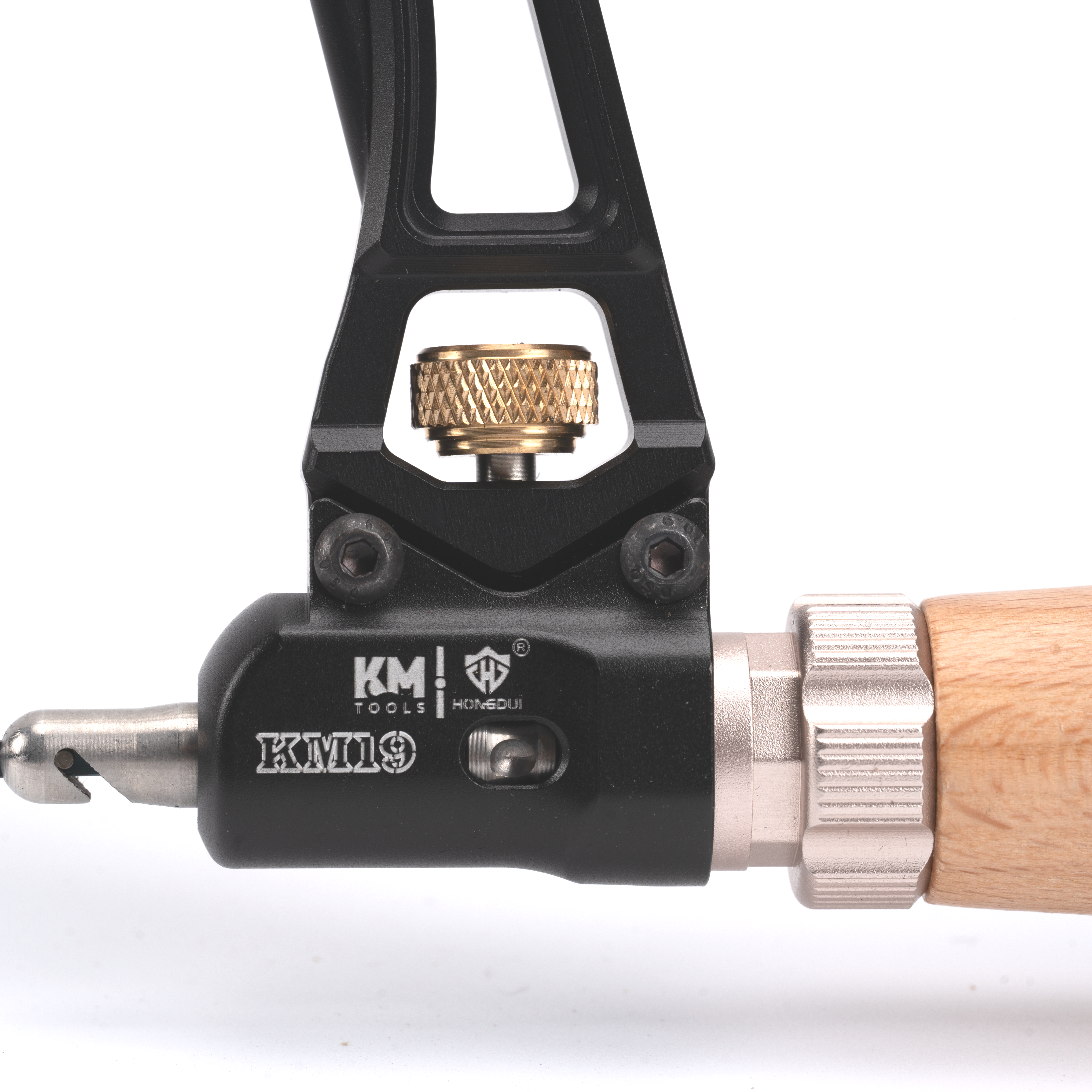
Manico regolabile: Il manico può essere montato su entrambi i lati del seghetto, consentendo di tagliare sia in spinta che in trazione per una maggiore versatilità.
Controllo della tensione: Facilmente regolabile da entrambi i lati del seghetto, con 8 scatti ogni 45 gradi, offrendo un controllo preciso sulla tensione e l'angolazione della lama. Allentare le camme per un movimento illimitato, perfetto per profili personalizzati e tagli complessi a mano libera.
Compatibile con più lame: Accetta lame da traforo da 6,5 pollici e lame per traforo a filo da 4,5"-6,5", offrendo una vasta gamma di opzioni di taglio.
About HONGDUI KM-19
Curving Unbound: The KM-19 Rigid-Frame Coping Saw System
The HONGDUI KM-19 is more than a standard hand saw—it is a high-performance profile-cutting system engineered for woodworkers who demand absolute, flex-free tracking. It features a unique synchronized, detent-locked indexing mechanism that allows you to rotate and lock the blade 360 degrees without losing tension. Whether you are executing complex, intricate joinery cuts or delicate curved fretwork, the KM-19 transforms your manual detailing into a fluid, zero-deflection operation.
KM-19
Approximately 320mm x 135mm x 25mm
High-grade 6061 Aerospace-Grade Aluminum & High-Tensile Alloy Steel.
Roughly 480g
Fits Standard 130mm (5-1/8") Pinless or Pinned Coping Saw Blades.
1 * Precision Coping Saw Frame, 1 * Pre-installed Woodworking Blade, 1 * Tensioning Adjustment Tool
FAQ
Check out the most common questions our customers asked.
What makes the KM-19 different from a standard hardware store coping saw?
The KM-19 is built with a high-rigidity aluminum alloy frame and a unique lever-action tensioning system. Unlike traditional saws that rely on twisting the handle to apply tension, the KM-19 uses a mechanical lever that provides significantly higher blade tension, resulting in cleaner cuts and less blade "wandering."
Does the KM-19 use standard coping saw blades?
Yes, it is compatible with standard 6.5-inch (approx. 165mm) pin-end blades. This allows you to use your favorite third-party blades (like Pegas or Olson) for different materials and tooth counts.
How do I adjust the blade angle?
The KM-19 features a 360-degree rotating blade holder. To adjust the angle, you simply rotate the thumb-adjusters at the front or rear of the frame. The indexing mechanism ensures the blade stays locked at the desired angle during the cut.
How much tension should I apply to the blade?
You should apply enough tension so that the blade emits a "ping" sound when plucked, similar to a guitar string. The KM-19’s lever system is designed to handle high tension, but you should always release the tension lever when the saw is not in use to prolong the life of the frame and the blade.
The blade rotation feels stiff. How can I fix this?
Over time, fine sawdust can enter the rotating assembly.
1. Release the tension lever.
2. Remove the blade.
3. Clean the rotating hubs with compressed air or a soft brush.
4. Apply a single drop of light machine oil (3-in-1 oil) to the rotating interface. Do not use heavy grease, as it will attract more dust.
Can I use this saw for metal or plastic?
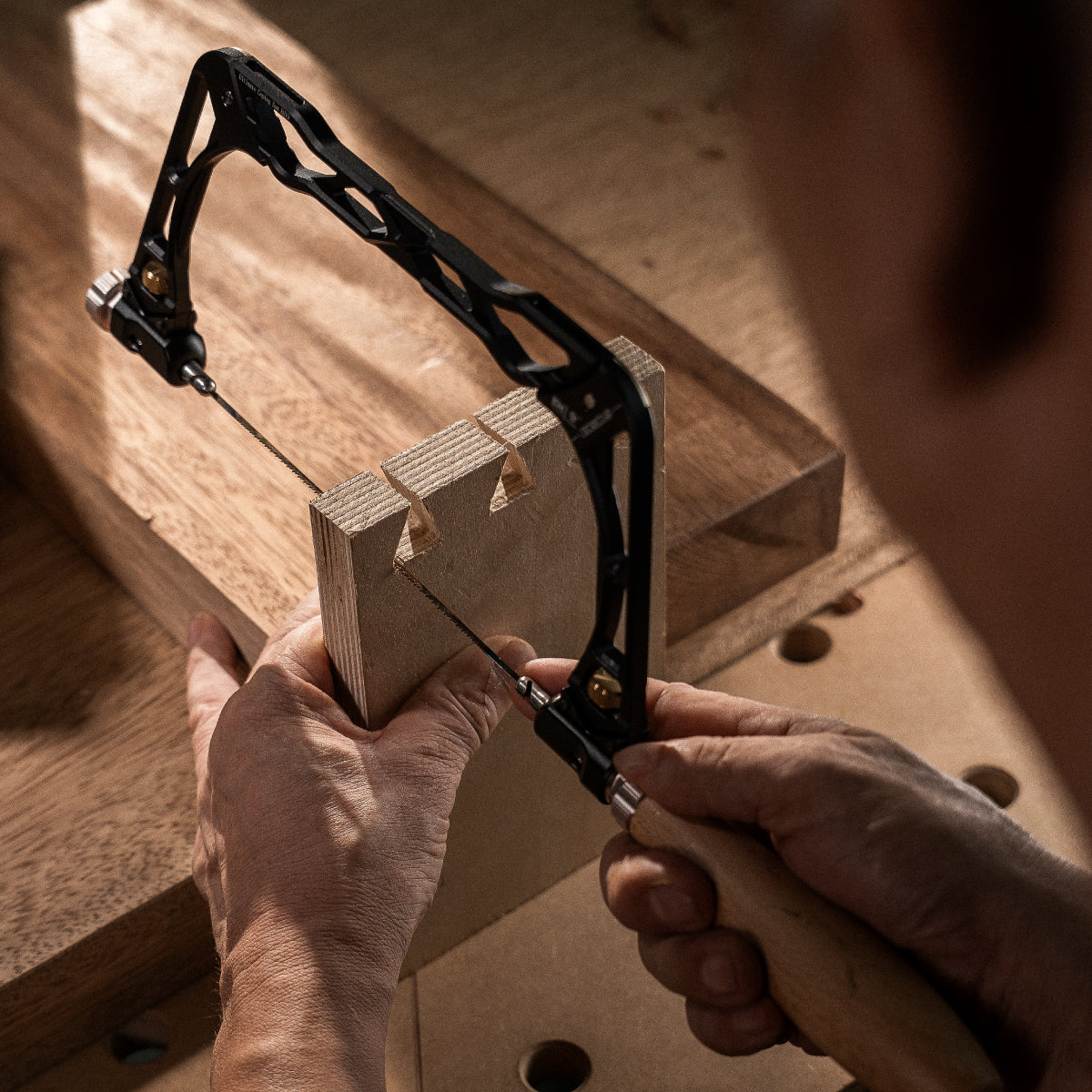
Yes, provided you install the appropriate blade. While the KM-19 is a favorite among woodworkers for clearing dovetail waste, its rigid frame makes it excellent for precision work in thin non-ferrous metals and plastics when paired with a high-TPI (teeth per inch) blade.
Why is my blade snapping frequently?
Frequent snapping is usually caused by one of three things:
1. Over-tensioning: While the saw supports high tension, exceeding the blade's physical limit will cause failure.
2. Aggressive Turning: Trying to turn the saw at too sharp an angle while moving too fast puts lateral stress on the pins.
3. Heat Buildup: In very hard woods, friction can overheat the blade. Slow down your stroke rate and let the teeth do the work.
The tension lever feels too hard to close. Is something wrong?
Check if the blade is properly seated in the pin slots. If the blade is slightly too short or incorrectly positioned, the lever will meet excessive resistance. Never force the lever; ensure the blade pins are fully engaged in the hooks first.