

HONGDUI KM-17 Pro Router Plane
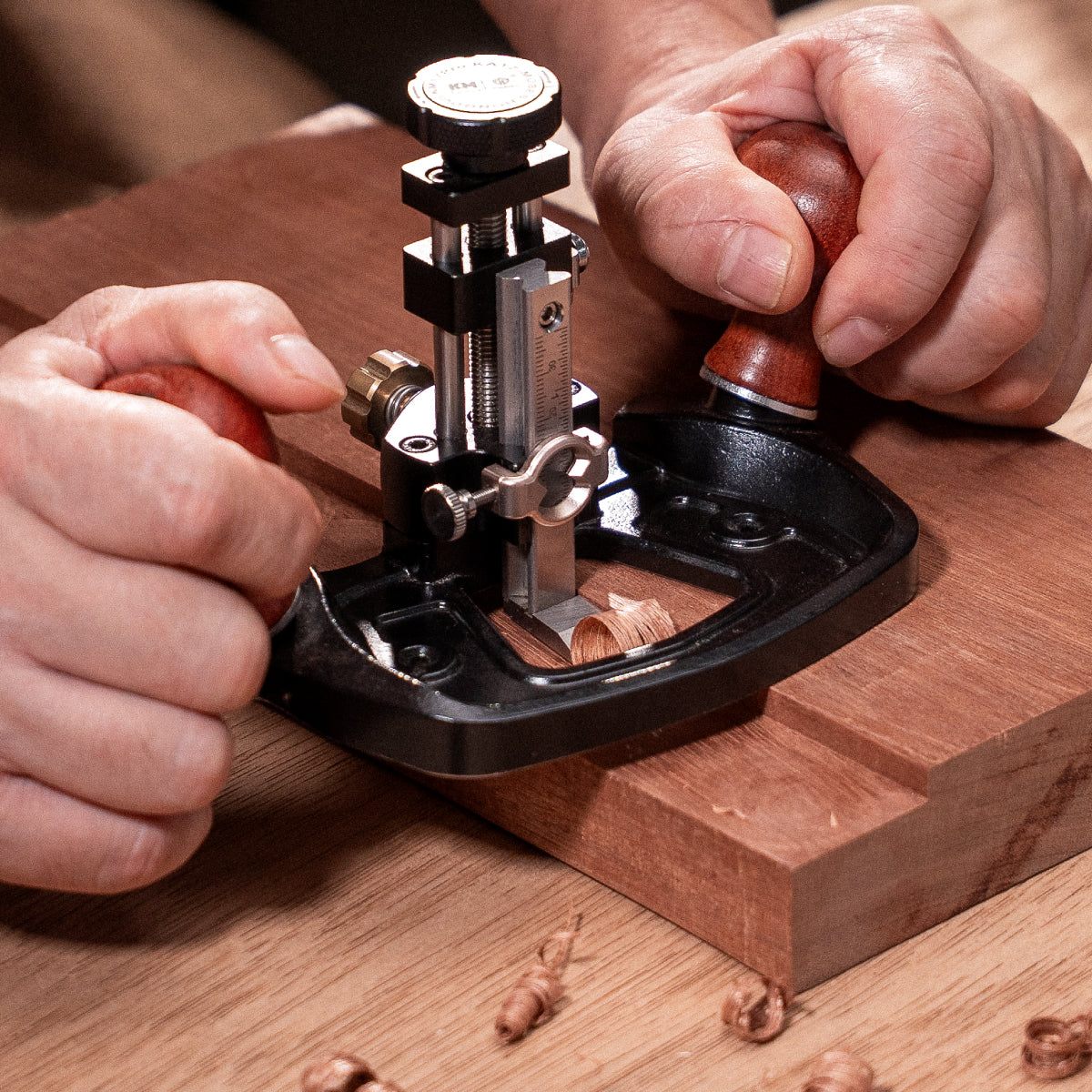
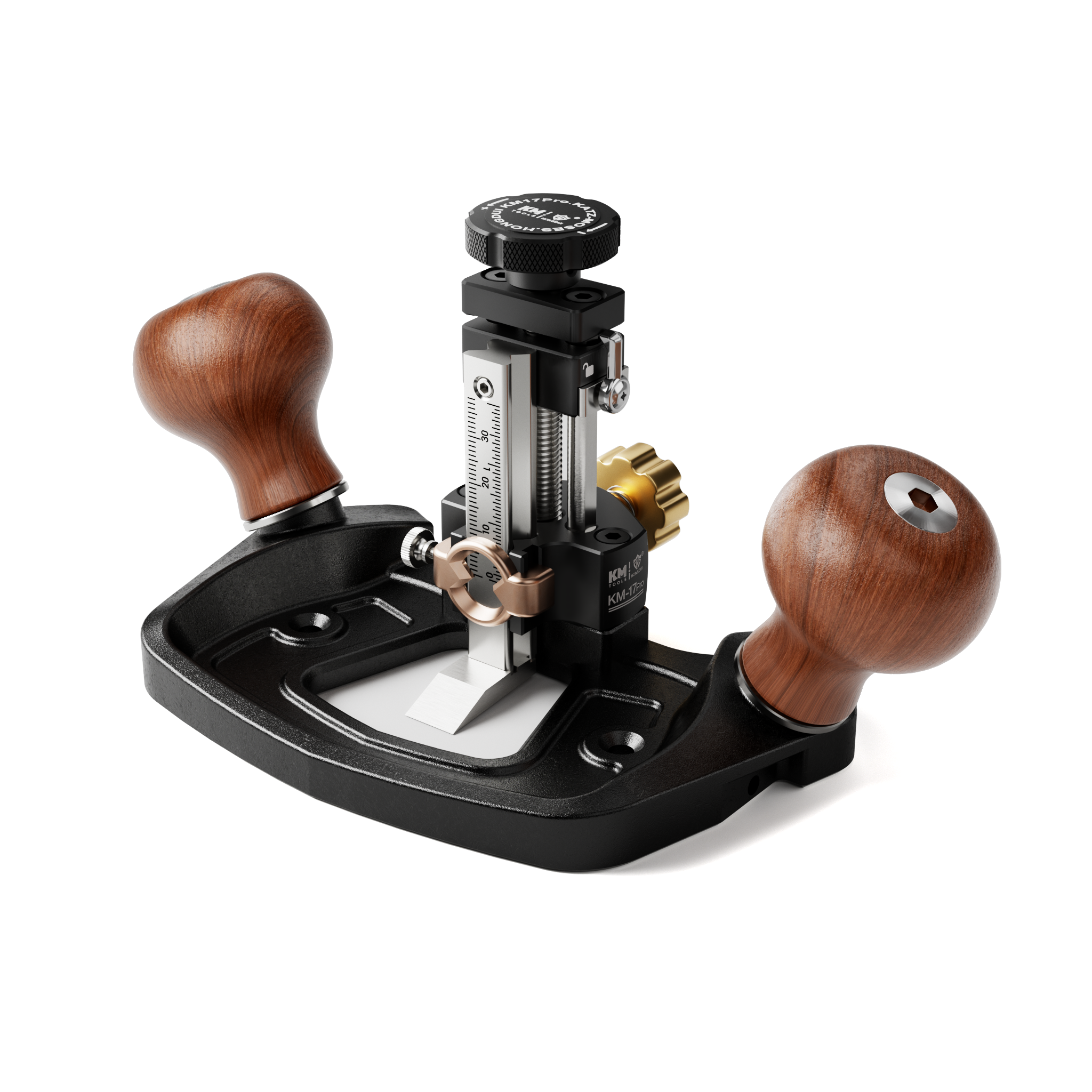
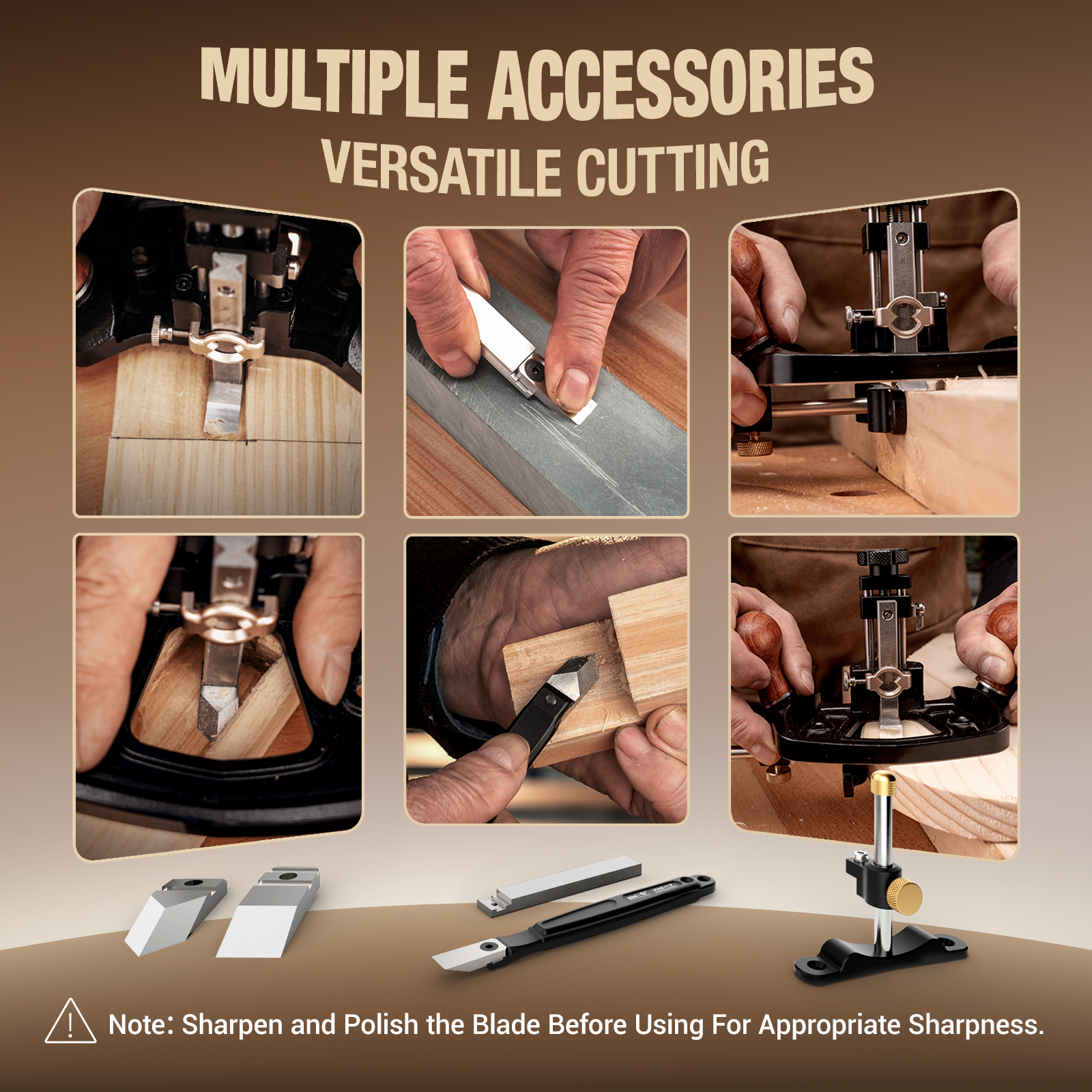
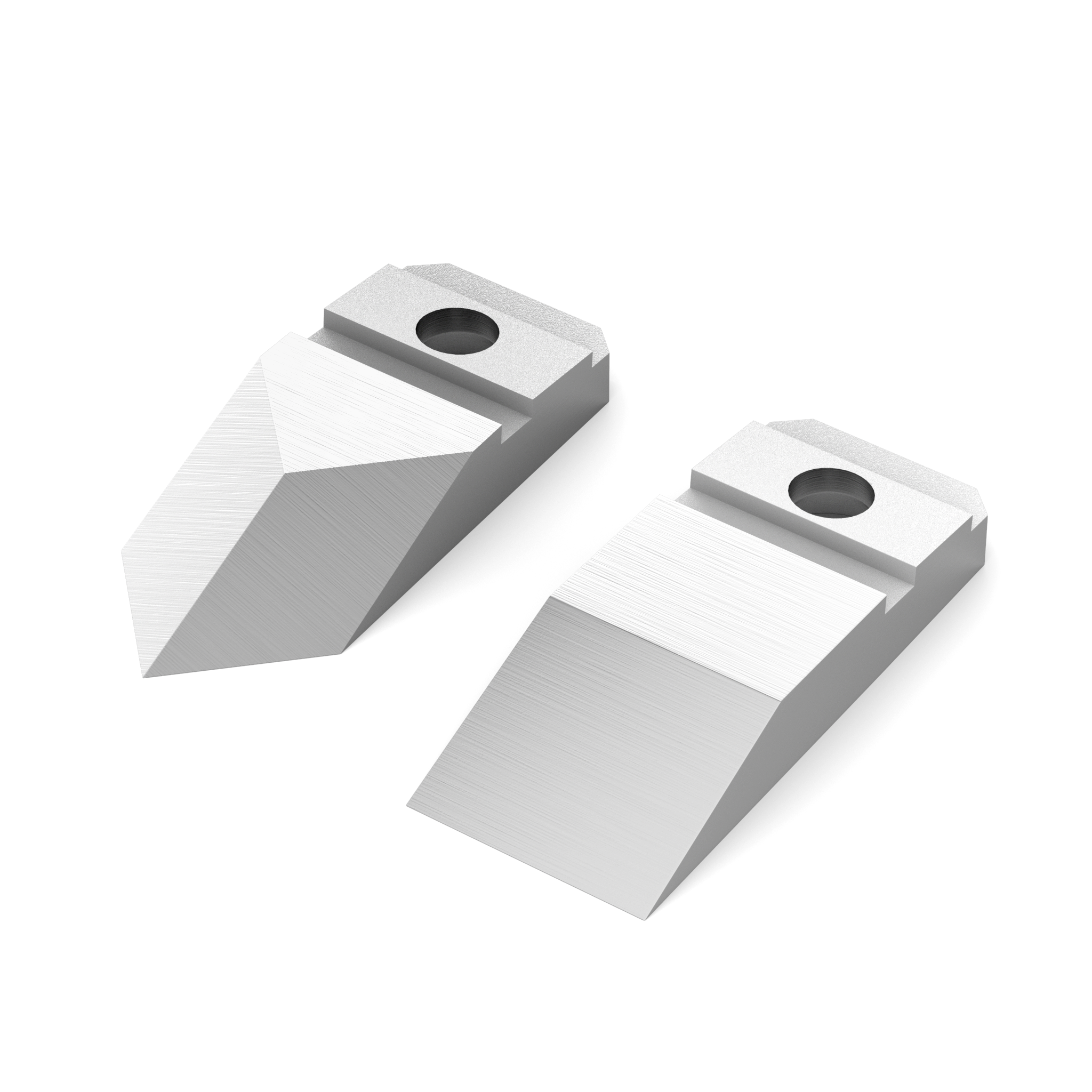
Versatile Dual-Blade Design: The KM-17 Pro Router Plane is equipped with both a straight and a 45° blade, which can interchanged depending on specific applications. The blades are ½” (12.7 mm) wide at the widest point for enhanced precision.
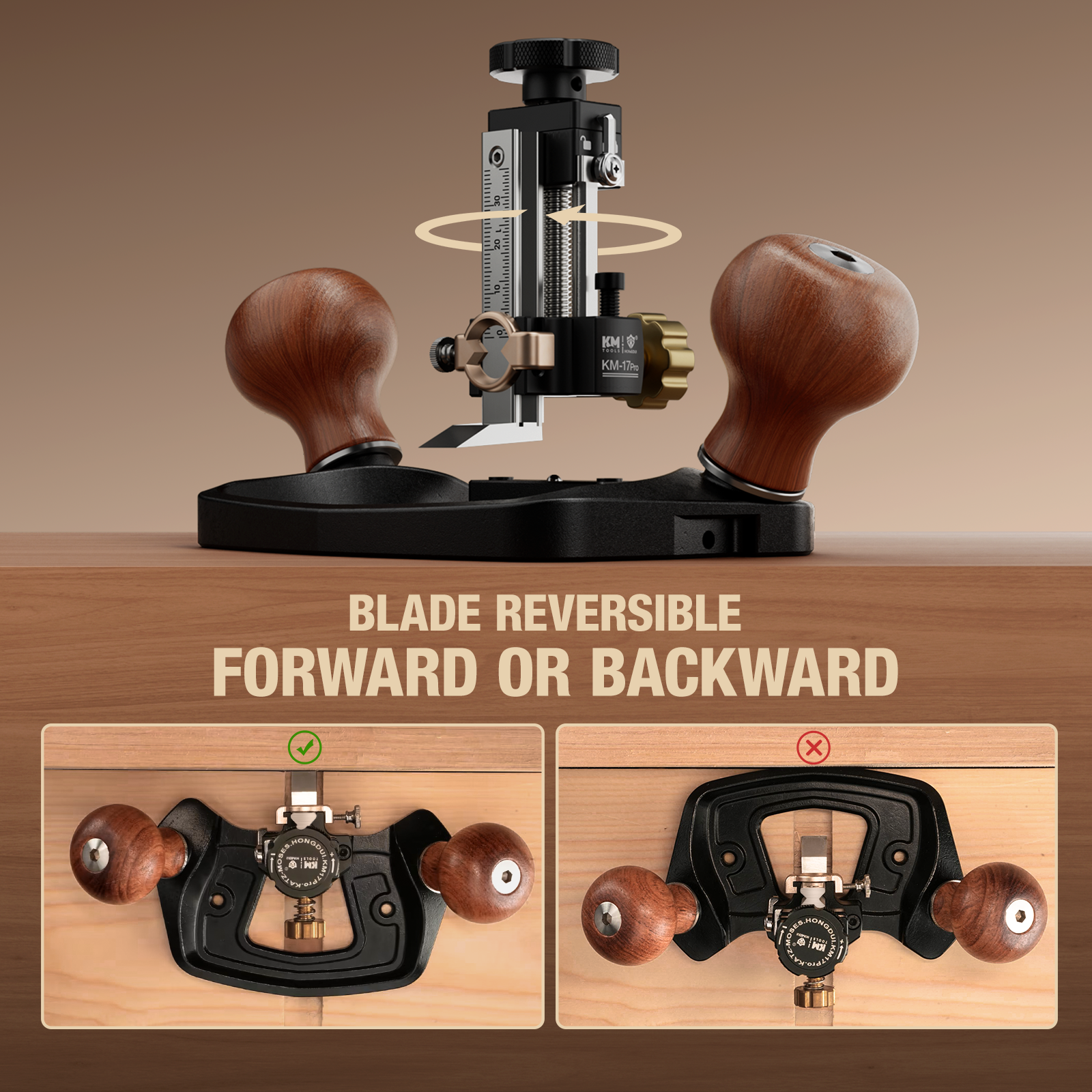
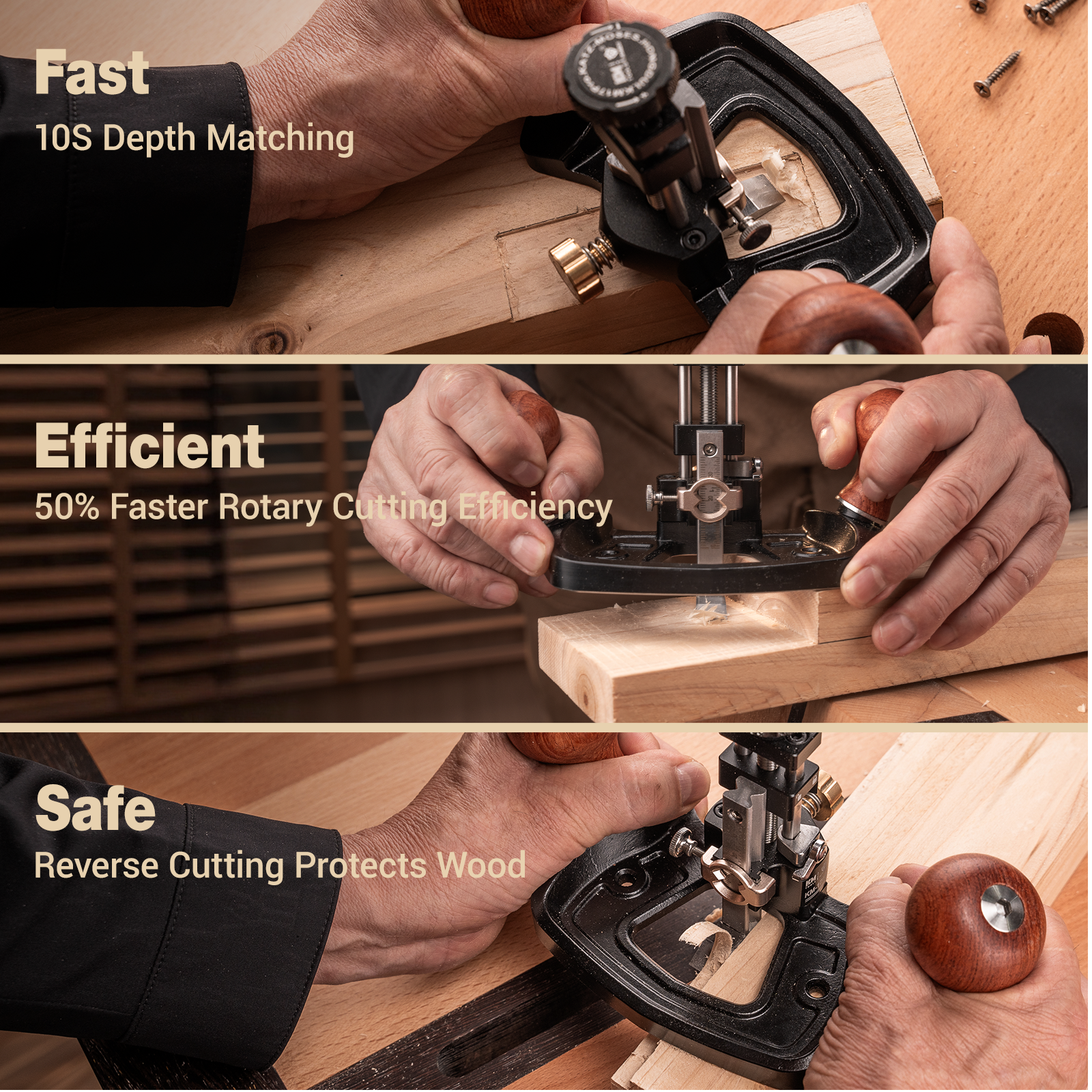
Advanced Blade Lift Mechanism: This router plane has revolutionized blade adjustment, eliminating the backlash and slop found in typical router planes. This system can be oriented forwards or backwards, perfect for accessing hard-to-reach corners.
CAM Lock Depth Stop: Using the only CAM LOCK depth stop in the market, this router plane enables users to lock down specific cutting depths for repetitive cuts without having to remeasure.
Adjustable and Removable Fence: It comes with an adjustable fence that can be attached to either side of the router plane. The fence can be flipped to reference either flat or curved edges, and is controlled by a large, easily adjustable brass knob.
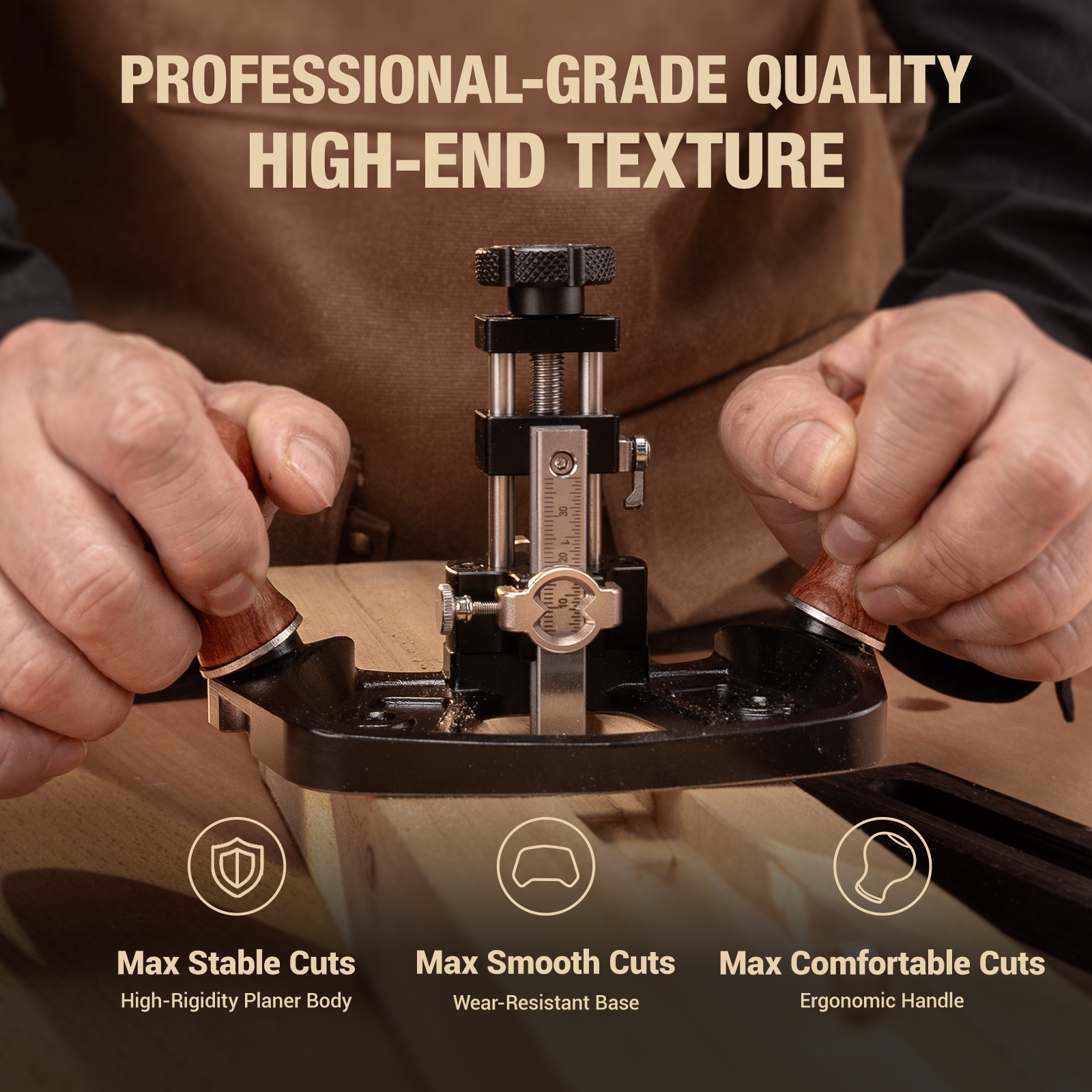
Die Steel Body: The body of the KM-17 Pro Router Plane is constructed from die steel, a type of high-carbon steel renowned for its exceptional durability, strength, and rust resistance.
We provide clear and easy-to-follow user manuals to help you get started effortlessly.
Click here to explore tutorials for our product.
About KM-17 Pro
The Gold Standard: KM-17 Pro Precision Router Plane
The KM-17 Pro is the ultimate fusion of traditional woodworking craftsmanship and modern mechanical engineering. Designed for those who seek perfection in joinery, this router plane is meticulously CNC-machined to ensure a flat, stable base and zero-play blade adjustment. Featuring an innovative depth-stop system and a versatile range of blade widths, the KM-17 Pro allows you to clear dadoes, tenons, and recesses with unparalleled control and a glass-smooth finish.
KM-17 Pro
Approximately 218*110*100mm
S136H Aluminum Copper Stainless Steel
Approx. 1.1kg
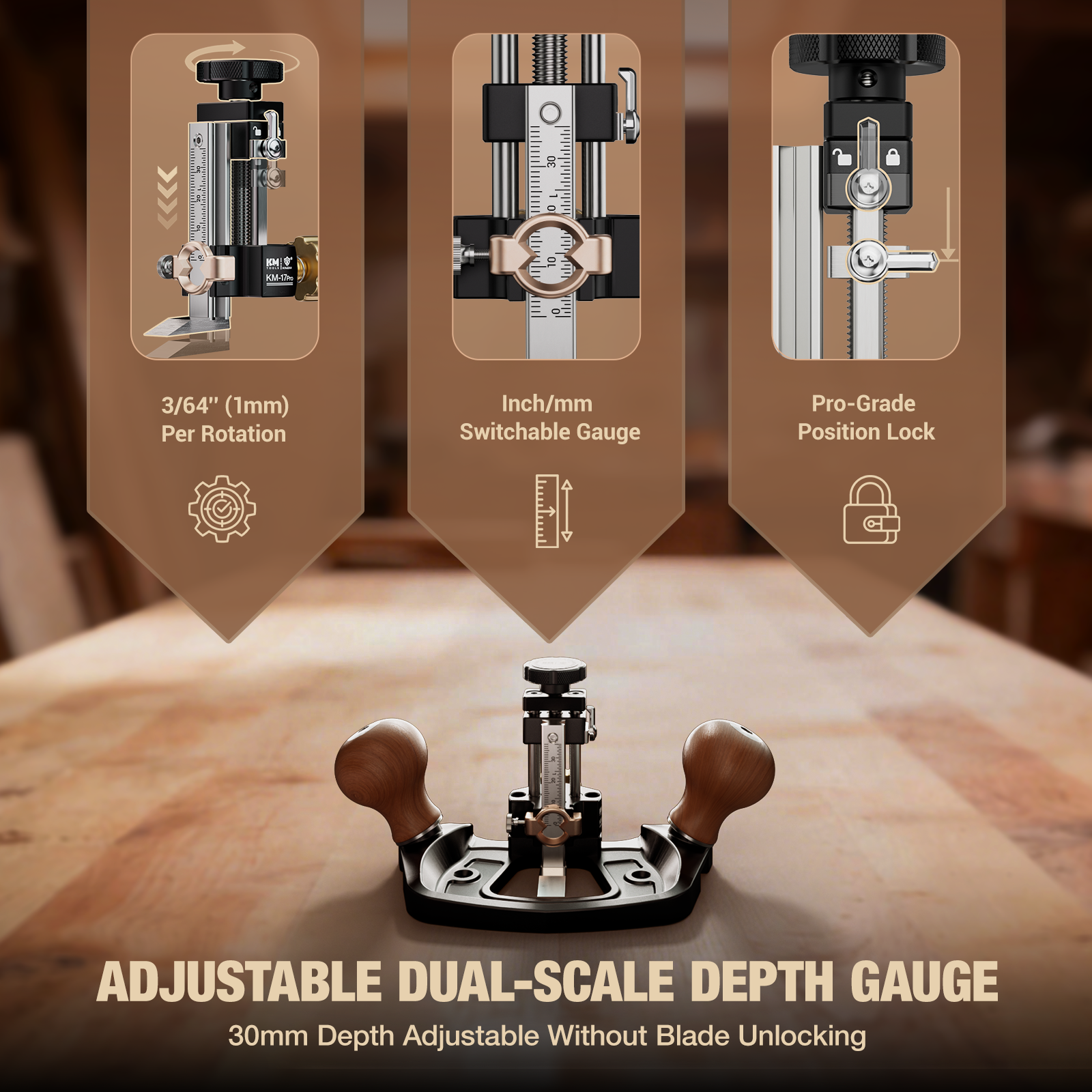
1.0 mm per full revolution of the adjustment knob
Max 35mm
1 * Router Plane Body, 2 * Blades(One pre-installed), 1 * Sharpening Holder, 1 * Mounting Fence
FAQ
Check out the most common questions our customers asked.
What makes the KM17 Pro version different from standard router planes?
The Pro version features a captive lead-screw mechanism that keeps the blade held securely in a threaded carrier, preventing it from falling out when the lock is loosened.
What is the adjustment resolution?
The tool uses a micrometric adjustment knob. One full rotation typically moves the blade 1mm, allowing you to dial in depth changes as small as 0.02mm to 0.05mm for final whisper-thin shavings that leave a glass-smooth finish.
What materials are used in its construction?
Body: High-strength die steel (often finished in a signature black coating) for significant weight and stability.
Blades: High-speed steel (HSS), which retains a sharp edge longer than standard carbon steel when working with abrasive hardwoods.
How do I change or remove the blade?
To remove the blade, fully back out the adjustment knob until the threaded carrier releases the blade shaft. When re-inserting, ensure the notch in the blade shaft aligns perfectly with the carrier pin before tightening the locking collar.
Can the blade be used in a bullnose(outboard) position?
Yes. The blade can be mounted in the standard position (facing inward) or reversed (facing outward). The outboard position is essential for reaching into corners or stopped grooves where the tool's body would otherwise prevent the cutter from reaching the end of the cut.
What is the purpose of the integrated depth stop?
The built-in depth stop allows you to preset a final cutting depth. You can plane progressively deeper until the adjustment knob hits the stop, ensuring that multiple grooves or tenons across a large project are all exactly the same depth.
How do I sharpen the KM-17 Pro blades?
Because the blades have a removable cutting head, you can unscrew the small hex bolt to detach the cutter from the shaft. This allows you to lap the flat back and hone the bevel on standard sharpening stones much more easily than a traditional L-shaped router blade.
My fence isn't staying parallel. How do I fix this?
Check the two locking points on the fence rods. Ensure the rods are seated fully in the body of the plane. When using the fence, apply pressure to the side of the plane closest to the fence to prevent it from crabbing or pivoting away from your reference edge.
Why is the blade shuddering or vibrating during a cut?
This is usually caused by taking too deep a cut or a dull blade. For the best results, set the blade to take a shaving only 0.1mm to 0.2mm thick. If the wood is particularly figured, ensure the locking collar is tightened firmly to eliminate any play in the blade carrier.